Macedonia under Philip was one of the few regions in Greece where they spoke Greek but did not give much weight to science and arts. For his son, Philip engaged the most important teacher (Aristotle), but for his people he only wanted military training and readiness. During his days, the Macedonian phalanx was created, a major innovation in military strategy that would play a key role in the years to come.
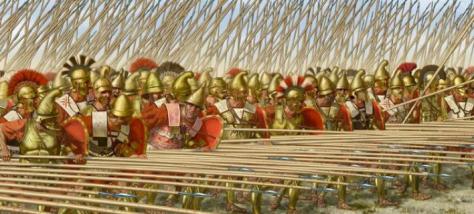
Philip made Pella as the capital of Macedonia, however, there were many cities in the vicinity under the control of Athens, which he could not endure. He began conquering wars and captured one after another all the cities that were influenced by Athenians until Peloponnese. Other cities saw him as a liberator and others as an oppressor. On the peak of his power, Philip was murdered and his 20-years-old son, Alexander, ascended him to the throne.
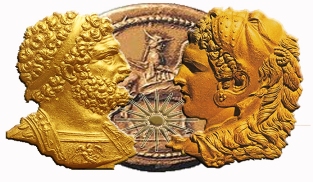
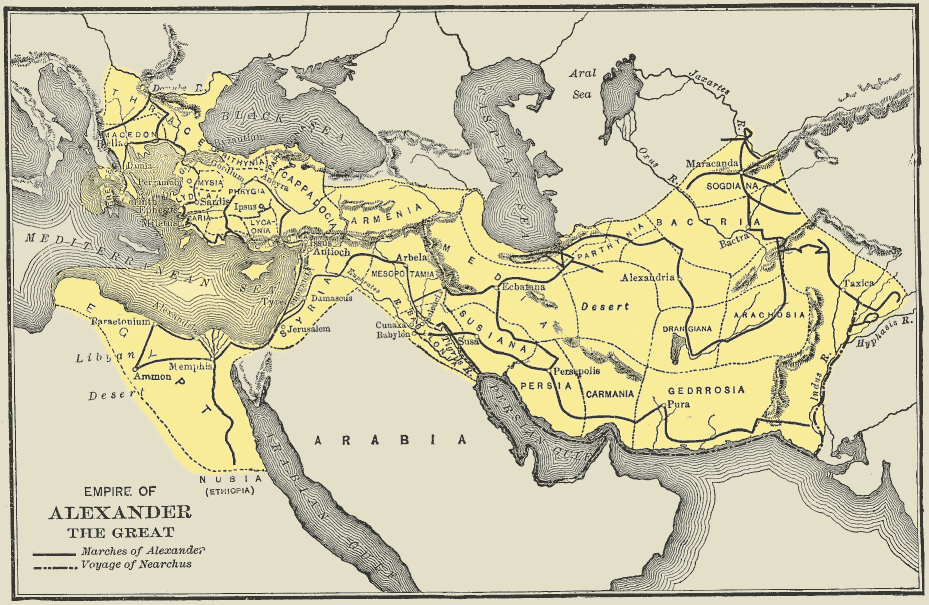
Many cities considered Macedonia to be weakened after the rising of a young man at the throne, the cities of Thrace and Illyria revolted, others in central Greece declared their independence, the Persian king Artaxerxes boasted that he had nothing to be afraid of and that he would soon conquer Greece. Alexander reacted with determination. He defused the internal opposition by hanging with haste the leaders of 12 hostile factions. Afterwards, he marched to the south and suppressed every revolution, he ended in Corinth where he was proclaimed commander-in-chief of all Greeks. Shortly afterward, in -335 he went north and set off the revolts of all barbarian tribes. In -334 he left 12,000 soldiers in Pella to oversee Greece and set off to conquer the world. He reached India, Asia, Egypt and North Africa, and created the largest empire that the world had ever known, establishing thousands of cities with his name and transmitting the Greek culture to the ends of the world.
Back to the Story of Humankind