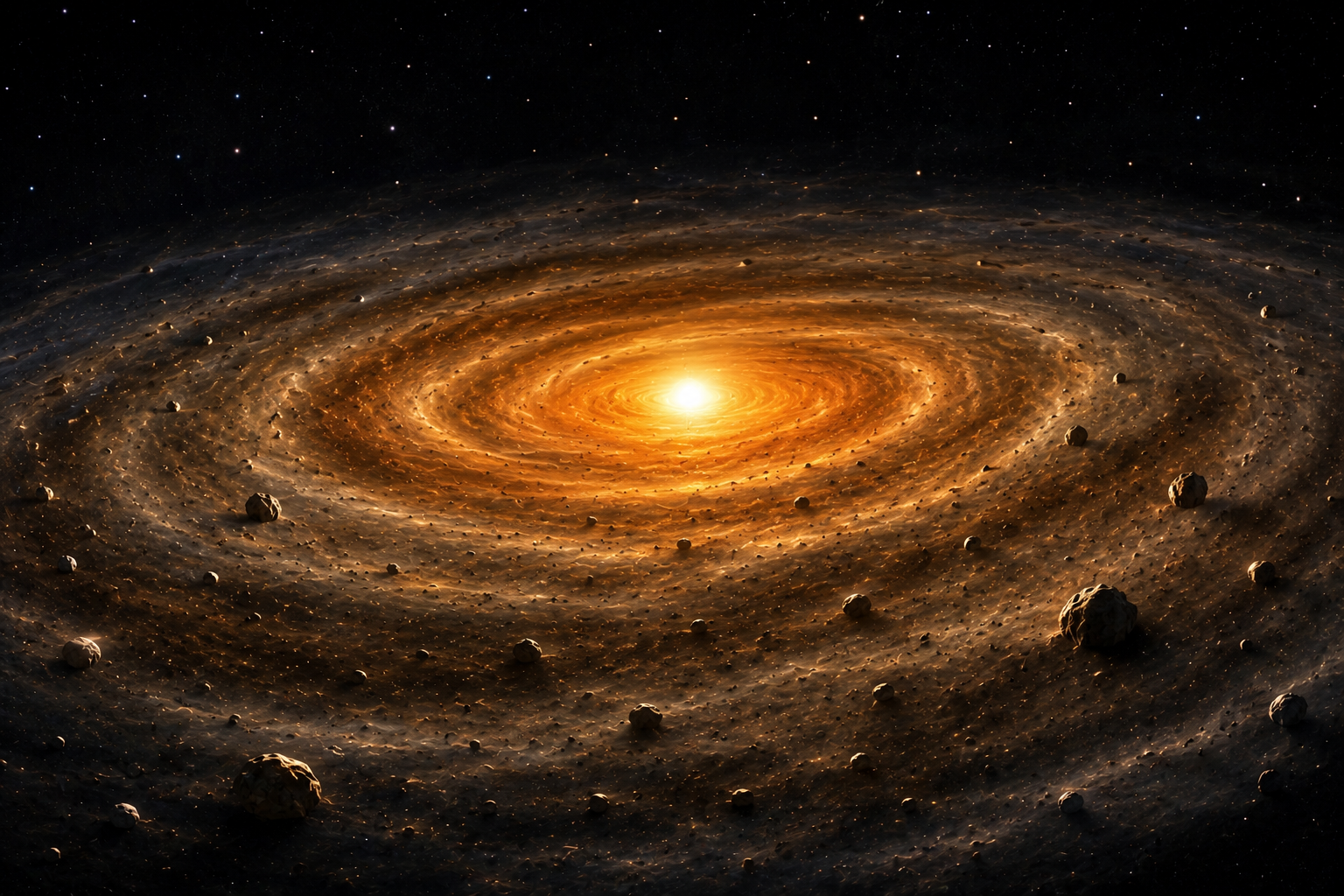
Over millions of years, constant collisions and mergers between these bodies created a protoplanet: the young Earth. In its earliest stage, Earth was a glowing sphere of molten rock. The intense heat came from violent impacts, gravitational compression, and the radioactive decay of elements within its interior. Heavier materials, such as iron and nickel, sank toward the center to form the core, while lighter materials formed the mantle and the crust.
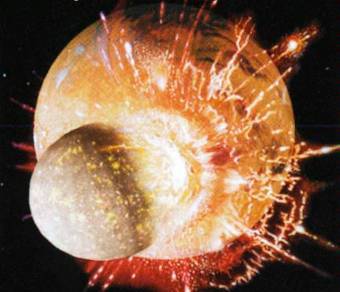
Shortly afterward, according to the most widely accepted theory, a planet-sized body called Theia collided with the young Earth. Material ejected into space from this enormous impact eventually formed the Moon. As Earth gradually cooled, the first solid rocks, the atmosphere, and the oceans appeared. These conditions later allowed life to emerge. Back to the Story of Humankind