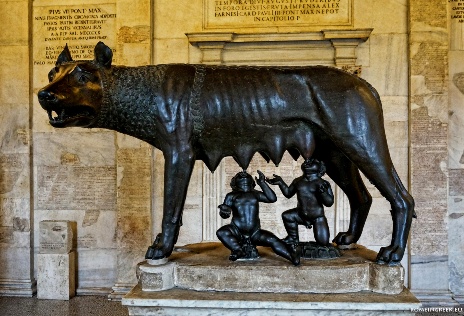
Beyond the myth, in the area where the city evolved, there were scattered villages and Neolithic settlements from 1000 BC until the Etruscans, as they spread, began to unite the villages creating a strong city. Rome first developed under the rule of the Etruscans, based on their politics, religion, art and engineering. Under the rule of Tarqinious the Elder, (616-578 BC), Rome gained great glory and power. Tarquinius subjugated the Tyrrhenians, the Sabinians and the Latins and brought Etruscan and Greek artists and engineers, creating amazing works and monuments in Rome such as the drainage of the region's swamps, the central sewer, the city center market, the big hippodrome, the temple of Zeus on the hill of Capitol, one of the seven hills that were the natural fortification of Rome.

In 509 BC, according to tradition, the grandson of Tarquinius raped Lucretia, a Roman aristocrat who called her relatives narrated the incident and then committed suicide. People revolted and drove Etruscans away, bringing in Rome democracy with Lucretia’s brother and husband appointed as the first consuls.
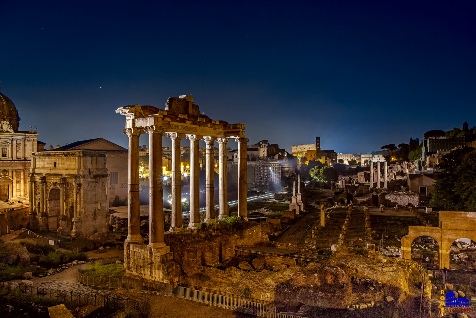
Patricians, according to the myth, were descendants of the 100 brave warriors who accompanied Romulus to the founding of the city. These 100 were named fathers of Rome and their descendants were Patricians. According to some other historians, the patricians were foreign conquerors who had invaded and conquered the area of Rome, turning the previous inhabitants, the Latins, into a lower class, the plebeian. Among those two, was a middle class of entrepreneurs who had become rich, but they did not have political power. The lowest class consisted of the slaves, at first they cost a lot so they were treated fairly well, but when the conquering wars began and there were plenty of them, their price fell sharply and according to ancient historians, unbelievable atrocities took place by the Romans who very often tortured slaves to death just for their fun.
When plebeian were away fighting and their families needed money, the patricians offered them with great willingness and also with great interest. When the money was not returned, the debtors had to be enslaved, a fact that caused great social unrest and a rebellion in 496 BC. The plebeians were fortified outside the city and refused to work or fight for Rome; the Senate was forced to negotiate and set up a new office, the mayors, in which the plebeians could be elected and have a saying. The people returned to their work but the social tensions continued in the next few decades, with intermissions during the wars. In 390 BC the Gauls invaded Italy and burned Rome, destroying all historical records. For a further 60 years there was many rebellions and struggles between classes, until the year 327 BC, when the Roman enslavement of a Roman was abolished. With social peace at home, Rome began to lay the foundations for the conquest of the world in the forthcoming centuries. Back to the Story of Humankind