Corinth
The history of Corinth dates back to the Mycenaean era, the city was famous for its wealth and was originally ruled by kings and aristocrats; as the Greek trade flourished, merchants and craftsmen conquered power, either by intrigues or by insurrections. The period from 625 to 585 under the dictatorship of Periandros, who supported letters and arts and imposed peace and discipline, Corinth became the greatest of all Greek cities. Periandros stimulated trade, promoted industry, reduced taxes for the poor, protected small merchants. Around -500 the Spartans overturned the dictatorship of Periandros’ descendants and reestablished aristocracy. Corinth, however, remained a wealthy trading force and gradually became the city of Hetairai (courtesans). The city invited Hetairai from all over Greece to participate in the supplication of goddess Aphrodite, and as they were considered benevolent, because they paid taxes in the temple of Aphrodite, they stayed. Because of them, the city flourished with visitors and wealth.Corinth the town of hetairai

Epidaurus
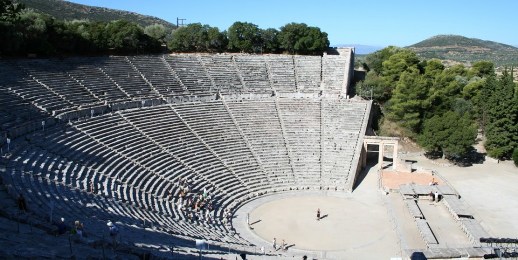
According to mythology, Asclepius, the hero-god of healing, was born in Epidaurus, where his worship began in the 6th century B.C., a fact that contributed to the unprecedented growth of the city. A great temple was built in which people from all parts of the Mediterranean would come to find their health. The patients followed the diet and treatment of the priest-doctors called Asklepiades; many stone signs have been found with marked treatments and treatment results. With the money and gifts given by the patients, Epidaurus became wealthy and built hostels, a gym, a stage and the famous, for its acoustics, Theater, for the entertainment of the people.Epidaurus the ancient theater
Delphi
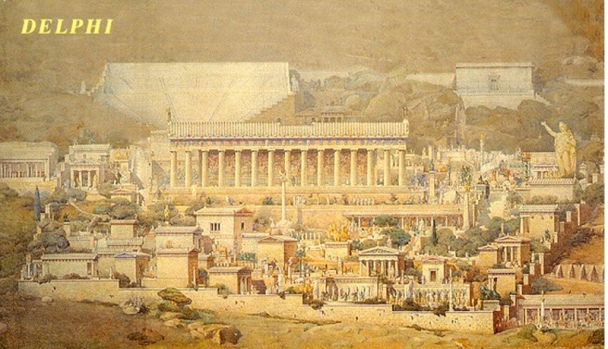
Delphi was an ancient Greek town known from the Homeric years under the name Pythos. Since the 8th century BC, the worship of Phoebus Apollo prevailed in Delphi and the most important oracle of the ancient Greek world was created. A significant number of tributes found in Delphi come from areas of Syria and Armenia shows that the sanctuary played an important role not only in Greece but also in eastern Mediterranean. Due to the great prestige of the oracle, the Greek cities had to consult it in order to make important decisions, as in the case of the colonies: the oracle was advising on the appropriate colony setting. At the beginning of the 6th century BC Delphic Amphictyonia (a Delphi-led alliance) waged war with the neighboring city of Krissa. Delphi won and increased their religious and political influence, becoming a panhellenic center and a holy city of ancient Greeks. It was believed to be the centre of earth. The oracle was preserved until the end of the 4th century AD, when it was forbidden, as a danger to Christianity, by the emperor Theodosius A.Delphi the centre of earth
Olympia
Olympia was the most glorious sanctuary of ancient Greece dedicated to Zeus. From 1000 BC the holy place for his worship had been formed and gradually attracted many pilgrims not only from the surrounding area but from all over Greece. In the year 776 BC, according to the tradition, the Spartan Lykourgos, made an agreement for celebration and games that will be known as Olympic Games. (776 BC is the year for the first recorded games, but there are many indications that it was happening many years earlier). Part of the deal was that during the games, a ceasefire would prevail across Greece. In the 5th century BC, Olympia gathered a lot of politicians, philosophers and artists from all over Greece, as they found a large audience to disseminate their ideas. So it was important to improve the facilities and they created accommodation and entertainment spaces for visitors. Over 70 important buildings are found in Olympia, ruins of which are still preserved. The Olympic Games were continued (with interruptions) until the 4th century A.D., when the emperor Theodosius forbade them as a danger for Christianity.Olympia, home of the Olympic games

Back to the Story of Humankind