Chavin's culture was one of the first to flourish in the Andean highlands, despite its central role in the region, independent societies with different customs developed in close proximity. One of these was the Paracas, whose culture flourished between 600 BC and 250 AD. The Paracas developed a well-organized society in the coastal zone of today's Peru and in cooperation with other tribes of the same era laid the foundations for the subsequent development of pre-Columbian cultures, such as the Incas. Paracas were depended heavily on fishing, but they also knew how to cultivate the land and produce beans, corn, pepper and more. They were also craftsmen with high skills.
DESIGNS BASED ON AUTHENTIC FABRICS OF PARACAS
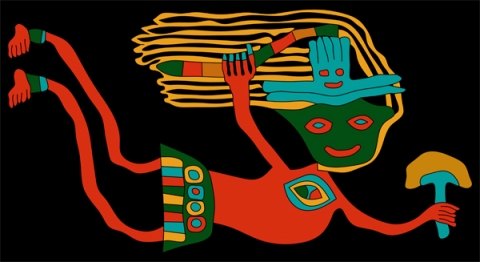
Paracas culture is known for the amazing fabrics, and are characterized by intense and contrasting colors as well as by the figures and motifs embroidered on the fabrics. The fabrics were found in graves, the environment of which protected them from the sun and other aggravating factors. It was used to wrap the bodies of the dead, creating a kind of mummy. Some bodies were wrapped with up to 200 different layers of cloth, showing social stratification, power and high social position.
The construction of these workshops required a complex organization and a large number of craftsmen and workers, such as wool-producing breeder, cotton-growing farmers, collectors of raw materials that fabricated paints, weavers; from all that we are aware of the society’s progress as they didn’t leave anything written.
Back to the Story of Humankind