PALMYRA
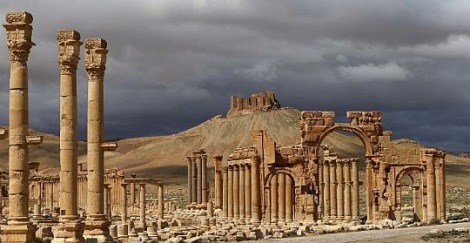
The weakening of central authority and the breakaway tendencies of border provinces facilitated the raids of peoples living outside the European and eastern borders of the Empire. German genders, such as the Franks, the Saxons, the Alamanians and others, began to make raids and looting villages near the borders. The Goths crossed the Danube and went to south Greece, they plundered Athens, Corinth, Argos and Sparta (267-268). The Franks reached the coast of Spain, while the Persians in the East defeated the Roman troops and captured the emperor in 260. Between 268 and 270 the Roman ally in the East and the Queen of Palmyra, Zenobia, made an independent state by annexing several Roman provinces, until an army was sent to deal with it.
The weakening of central authority and the breakaway tendencies of border provinces facilitated the raids of peoples living outside the European and eastern borders of the Empire. German genders, such as the Franks, the Saxons, the Alamanians and others, began to make raids and looting villages near the borders. The Goths crossed the Danube and went to south Greece, they plundered Athens, Corinth, Argos and Sparta (267-268). The Franks reached the coast of Spain, while the Persians in the East defeated the Roman troops and captured the emperor in 260. Between 268 and 270 the Roman ally in the East and the Queen of Palmyra, Zenobia, made an independent state by annexing several Roman provinces, until an army was sent to deal with it.
THE WALL OF THE PALACE OF THE DIAKLEIAN IN THE SPLIT
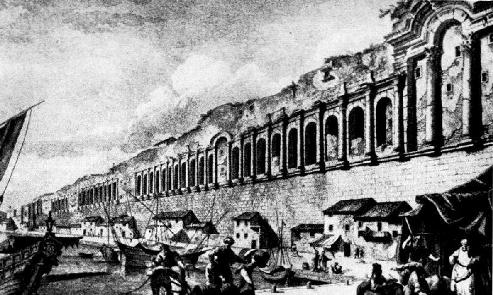
Most emperors in the 3rd century came from the provinces and had no tangible links with Rome. Of these many were from Illyria, so this period 235-284 is called the period of the Illyrian Emperors. In 284, Diocletian realized that the Empire was too large to be governed by a man and made a wide range of reforms.
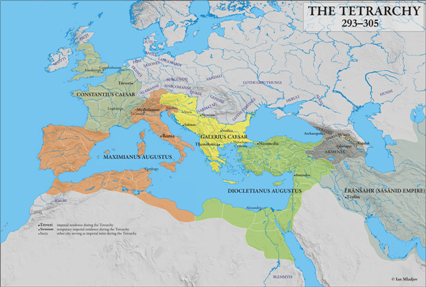
Because of the immense extent of the state, he decided to share the power. He ruled the eastern part of the Empire and gave Western command to a dedicated militar, Maximian. Each of them, gave the half of his area to an associate, Diocletian to Galerius and Maximilian to Constantine Chloros, thus the Empire was virtually divided into four different parts. Rome remained the capital of the Empire and Diocletian had the general oversight of the administration. The system was called the Quadruple and functioned perfectly as long as Diocletian was ruling. When he retired from the throne in 305, the increased aspirations of the co-rulers provoked wars between them, resulting in their extinction and the destruction of the Roman army. Back to the Story of Humankind
Most emperors in the 3rd century came from the provinces and had no tangible links with Rome. Of these many were from Illyria, so this period 235-284 is called the period of the Illyrian Emperors. In 284, Diocletian realized that the Empire was too large to be governed by a man and made a wide range of reforms.
Because of the immense extent of the state, he decided to share the power. He ruled the eastern part of the Empire and gave Western command to a dedicated militar, Maximian. Each of them, gave the half of his area to an associate, Diocletian to Galerius and Maximilian to Constantine Chloros, thus the Empire was virtually divided into four different parts. Rome remained the capital of the Empire and Diocletian had the general oversight of the administration. The system was called the Quadruple and functioned perfectly as long as Diocletian was ruling. When he retired from the throne in 305, the increased aspirations of the co-rulers provoked wars between them, resulting in their extinction and the destruction of the Roman army. Back to the Story of Humankind