Biography
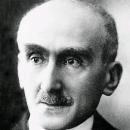
Henri Bergson (1859–1941) was one of the most influential French philosophers of the late nineteenth and early twentieth centuries. His work explored time, consciousness, memory, intuition, freedom, and the creative forces underlying life. He was born in Paris on October 18, 1859, into a Jewish family of Polish and English ancestry. His father, a musician and composer, was of Polish origin, while his mother was English. After spending part of his early childhood in London, Bergson returned to Paris, where he received his education.In 1878, he entered the École Normale Supérieure, one of France’s leading institutions of higher education. He graduated in philosophy in 1881 and began his career as a secondary-school teacher in Angers and Clermont-Ferrand. His early philosophical investigations culminated in his doctoral thesis, Time and Free Will: An Essay on the Immediate Data of Consciousness (1889), in which he challenged the tendency to treat time as a measurable succession of separate units, arguing instead that lived experience unfolds as a continuous flow.
In 1896, he published Matter and Memory, an influential study of the relationship between perception, memory, the body, and consciousness. He taught at the École Normale Supérieure from 1898 to 1900 before joining the Collège de France, where he held the chair of Greek and Latin philosophy from 1900 to 1904 and the chair of modern philosophy from 1904 to 1921. His lectures attracted large audiences and made him one of the most celebrated intellectual figures of his era.
His international reputation grew considerably with the publication of Creative Evolution in 1907. In this work, Bergson presented evolution as a creative process that could not be fully explained through mechanical laws alone. His concept of the élan vital, or vital impetus, expressed his view of life’s dynamic and inventive movement. His ideas influenced philosophical debates as well as literature, psychology, and the arts.
In 1914, Bergson was elected to the Académie française. During and after the First World War, he also became involved in international intellectual cooperation and efforts to promote peace. He served as president of the International Committee on Intellectual Cooperation of the League of Nations, an organization that helped lay the foundations for later international cultural and educational cooperation.
In 1927, Bergson was awarded the Nobel Prize in Literature in recognition of his rich and dynamic ideas and the brilliant manner in which he presented them. Increasingly limited by severe arthritis during the later years of his life, he withdrew from much of public life. Nevertheless, he continued to develop his philosophical thought. In 1932, he published The Two Sources of Morality and Religion, his final major philosophical work, examining the origins of morality, religion, and social life. In 1934, he published The Creative Mind, a collection of essays that offered an introduction to central aspects of his philosophy.
During the German occupation of France and the establishment of the Vichy regime in 1940, Bergson refused an offer of exemption from anti-Jewish regulations. Despite his advanced age and failing health, he registered as Jewish in solidarity with those being persecuted. He died in Paris on January 4, 1941, at the age of eighty-one.
Bergson’s philosophy left a lasting mark on modern thought. His account of lived time, his exploration of memory and consciousness, and his emphasis on intuition and creativity continued to inspire philosophers and writers long after his death. Although his influence declined in some academic circles during the mid-twentieth century, his work later received renewed attention, notably through the writings of Gilles Deleuze. Bergson remains an important thinker for anyone seeking to understand time, freedom, consciousness, and the creative nature of life.