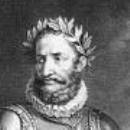
Biography
Luís Vaz de Camões (c. 1524 – 10 June 1580) was a Portuguese poet and is regarded as Portugal’s national poet, chiefly because of his masterpiece, The Lusiads. This epic poem, composed of 1,102 eight-line stanzas, recounts the history of the Portuguese people, from their legendary origins to the poet’s own time. Few reliable details about Camões’s life have survived. He was probably born in Lisbon and is believed to have come from a family of minor nobility. He received a broad education and spent some time at the court of King John III of Portugal. According to tradition, he was banished from court because of a forbidden love affair and later served as a soldier in Ceuta, in North Africa, where he lost his right eye in battle.
In 1552, Camões was arrested in Lisbon after becoming involved in a street fight and was imprisoned for several months. He eventually received a royal pardon and, in 1553, sailed to India in military service. During his years in the East, he lived in Goa and Macao and experienced numerous hardships and adventures. On a voyage near the mouth of the Mekong River, his ship was wrecked; legend has it that he managed to swim ashore while holding the manuscript of The Lusiads above the water. After a period of poverty and difficulty in Mozambique, he finally returned to Lisbon in 1570.
In 1572, Camões published The Lusiads, much of which he had written during his travels. The poem brought him great fame, both in Portugal and abroad, and established him as one of the greatest figures in European literature. He also wrote sonnets, odes, elegies and plays, although much of his lyrical poetry was published only after his death. Camões died in Lisbon on 10 June 1580, in poor health and difficult financial circumstances. The anniversary of his death is now celebrated as Portugal Day.