Biography
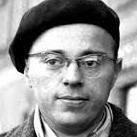
Joseph Conrad(1857–1924) was a Polish-born British novelist who wrote in English and is regarded as one of the greatest novelists in the language. He was born **Józef Teodor Konrad Korzeniowski** on December 3, 1857, in Berdychiv, then part of the Russian Empire (now in Ukraine), to Polish parents. He was the only child of Apollo Korzeniowski, a poet, translator, and political activist, and Ewa Bobrowska. Because of his father's opposition to Tsarist rule, the family was exiled to northern Russia, where the harsh conditions contributed to his mother's death in 1865. After returning to Poland, his father died in 1869, leaving the twelve-year-old Conrad in the care of his maternal uncle, Tadeusz Bobrowski.
In 1874, Conrad traveled to Marseille, France, where he began his career at sea aboard French merchant ships, sailing throughout the Mediterranean and beyond. In 1878 he moved to England and joined the British Merchant Navy. He became a British citizen in 1886 and earned his master's certificate, allowing him to command merchant vessels. Until 1894 he sailed extensively, particularly in the Far East and the Congo, experiences that later provided the material for many of his novels.
After retiring from the sea in 1894, Conrad settled in England, married **Jessie George**, had two sons, and devoted himself to writing. His first novel, ***Almayer's Folly***, was published in 1895. Among his greatest works are ***The Nigger of the "Narcissus"*** (1897), ***Heart of Darkness*** (serialized in 1899; book edition 1902), ***Lord Jim*** (1900), ***Typhoon*** (1902), ***Nostromo*** (1904), ***The Secret Agent*** (1907), ***Under Western Eyes*** (1911), and ***The Shadow-Line*** (1917). *Heart of Darkness*, with its powerful exploration of imperialism, colonial exploitation, and human nature, became one of the most influential works of modern literature. It inspired **T. S. Eliot**, who quoted it in *The Waste Land*, and later served as the basis for Francis Ford Coppola's film *Apocalypse Now* (1979).
Although Conrad struggled financially during the early years of his literary career, he achieved international recognition after the publication of **Chance** (1913). In 1924 he declined a British knighthood. He died of a heart attack on August 3, 1924, in Bishopsbourne, Kent, England, and was buried under his Polish name, in accordance with his wishes.