Biography
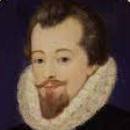
John Dowland (probably 1563 – 20 February 1626) was an English composer, lutenist and singer of the Renaissance. His instrumental music revived in the twentieth century enriching the repertoire for lutenists and guitarists. He is also known for his melancholy songs such as " Come, heavy sleep", "Come again", "Flow my tears", "I saw my Lady weepe", "Now o now I need must part" and "In darkness let me dwell".We know very little of John Dowland's early life, but it is generally believed that he was born in London, perhaps in 1563. In 1580 he went to Paris, in the service of Sir Henry Cobham, ambassador to the French court. At that time he became a Roman Catholic. Around 1584, he returned to England and married. In 1588 he was admitted Mus. Bac. from Christ Church, Oxford. In 1594 he sought to occupy the position of lute player in the royal court but his application was rejected, he claimed that his religion was the reason for rejection by the Protestant court of Queen Elizabeth I. From 1598 Dowland worked at the Danish royal court, although he continued to travel frequently to London and publish his music. His collaboration with the Danish royal court ended in 1608, since then he settled permanently in London, writing music until the end.
Most of his music is for his own instrument, the lute. He wrote several books of solo lute works, songs for lute (for one voice and lute), pieces with lute accompaniment, and many pieces for violin and lute. Two major influences on his music were popular troubadour songs and the dance music of the time. While the date of his death is unknown, Downland's last payment was on 20 January 1626 and his burial date was 20 February 1626.