Biography
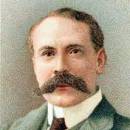
**Biography** Sir Edward William Elgar (1857–1934) was one of England's greatest composers and played a major role in the revival of British classical music. Interest in his work grew significantly during the 1960s with the release of many new recordings of his compositions. Elgar was born in Lower Broadheath, near Worcester, England, on June 2, 1857, the fourth of seven children. His father was organist at St George's Catholic Church from 1846 to 1885, while his mother had converted to Roman Catholicism despite her husband's initial reservations. All of the children were raised in a musical environment, and from the age of eight Edward received piano and violin lessons. He began composing at an early age and, despite lacking formal musical education, taught himself by reading every book on music theory he could find. He left school in 1872 and took an office job while also making his first appearances as a violinist and organist. He soon resigned in order to pursue a musical career, earning a living by teaching piano and violin. Elgar became an active member of the Worcester Glee Club alongside his father, accompanying singers, playing the violin, composing, and arranging music. During his early travels abroad, Elgar visited Paris in 1880 and Leipzig in 1882, where he attended concerts by some of Europe's finest orchestras. In 1882 he wrote: "I got a pretty good dose from Schumann, Brahms, Rubinstein and Wagner, so I have no reason to protest." At the age of twenty-nine he took on a new student, Alice Roberts, a writer eight years older than himself, whom he married three years later. Besides being a source of inspiration, Alice became an insightful critic of his music and acted as his manager and secretary. Elgar's compositions received little recognition until 1899, when his *Enigma Variations* achieved immediate success in Britain and abroad. This was followed in 1900 by the choral masterpiece *The Dream of Gerontius*, based on the poem by Cardinal Newman. Although the work initially provoked controversy among some Anglican circles because of its strong Roman Catholic themes, it soon became, and remains, one of the central works of the British choral repertoire. Most of Elgar's best-known compositions were written between 1899 and 1920, many of them orchestral works. He also composed chamber music, concertos, and numerous songs, including the famous melody *Land of Hope and Glory*. In 1924 he was appointed Master of the King's Musick. The death of his wife Alice in 1920 was a devastating blow from which he never fully recovered. Sir Edward Elgar died of colorectal cancer on February 23, 1934, at the age of seventy-six.