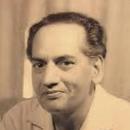
Biography
Faiz Ahmad Faiz (1911–1984) was a Pakistani poet and writer, and one of the most celebrated poets of the Urdu language. He was born on February 13, 1911, in Sialkot, Punjab, then part of British India. He studied at Government College Lahore and later served in the British Indian Army during the Second World War.
After Pakistan gained independence in 1947, Faiz became editor of The Pakistan Times and Imroze, while also becoming an important figure in the Progressive Writers' Movement and a prominent member of the Communist Party of Pakistan. In 1951, he was arrested in connection with the Rawalpindi Conspiracy Case and accused of involvement in a plot to overthrow the government. He spent four years in prison and was released in 1955. His years of imprisonment produced some of his most powerful poetry.
After his release, Faiz continued to play a leading role in progressive literary and cultural circles. In 1962, he received the Lenin Peace Prize from the Soviet Union. In 1964, he settled in Karachi and was appointed principal of Abdullah Haroon College, while continuing his work as a writer and editor.
Following the military coup that brought General Muhammad Zia-ul-Haq to power in 1977, Faiz went into exile in Beirut, Lebanon. From 1978 to 1982, he edited Lotus, a literary magazine supported by the Soviet Union and associated with writers from Asia, Africa and the Arab world. He returned to Pakistan in 1982 and died in Lahore on November 20, 1984. Shortly before his death, he had been nominated for the Nobel Prize in Literature.
Faiz was married to Alys Faiz from 1941, and they had two daughters. A committed Marxist and progressive intellectual, he combined the traditional imagery and forms of Urdu poetry with themes of love, social justice, political oppression, revolution and human freedom.
His major poetry collections include Naqsh-e-Faryadi (1943), Dast-e-Saba (1952), Zindan-Nama (1956) and Dast-e-Tah-e-Sang. His poetry remains highly influential in Pakistani and South Asian literature and continues to be translated and read around the world.
In 1990, six years after his death, the Government of Pakistan awarded Faiz the Nishan-e-Imtiaz, one of the country's highest civil honours, in recognition of his contribution to literature.