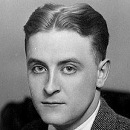
Biography
F. Scott Fitzgerald (1896–1940) was an American novelist and short-story writer whose work explored ambition, love, wealth and disillusionment. Born on September 24, 1896, in Saint Paul, Minnesota, he grew up with a strong awareness of social status. His family relied largely on his mother’s inheritance after his father experienced professional setbacks.He attended Princeton University, where he developed his literary interests, but left without graduating and joined the army in 1917. The First World War ended before he was sent overseas. While stationed in Alabama, he met Zelda Sayre. Financial uncertainty initially disrupted their engagement, but the success of his first novel, This Side of Paradise (1920), enabled them to marry that April. Their daughter, Frances, was born in 1921.
Fitzgerald became a celebrated voice of the Jazz Age, earning much of his income through magazine stories. In The Beautiful and Damned (1922), he examined a privileged couple’s decline. During the 1920s, he spent extended periods in France, where he befriended Ernest Hemingway. His third novel, The Great Gatsby (1925), transformed a story of romantic longing into an exploration of class, self-invention and the American dream. Although it received critical praise, its initial sales were disappointing.
His marriage became increasingly troubled, while alcoholism, financial pressure and Zelda’s mental illness complicated his working life. Tender Is the Night (1934), drawing partly on these experiences, portrayed the deterioration of a gifted psychiatrist and his marriage. Fitzgerald continued writing through periods of illness and personal crisis.
In 1937, he moved to Hollywood to work as a screenwriter. He died of a heart attack on December 21, 1940, aged 44, leaving his final novel unfinished. It appeared posthumously as The Last Tycoon (1941). Zelda died in a hospital fire in 1948. Fitzgerald’s reputation grew substantially after his death, and his fiction became central to American literature.


