Biography
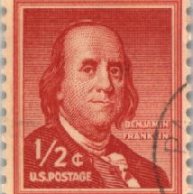
Benjamin Franklin (1706–1790) was one of the Founding Fathers of the United States and one of the most remarkable figures of the 18th century. He was a writer, printer, publisher, scientist, inventor, diplomat, and political thinker whose work helped shape both American independence and the spirit of the Enlightenment.
Born in Boston on January 17, 1706, Franklin began his career as a printer and soon became known for his intelligence, curiosity, and practical wisdom. Through his newspaper, essays, and the famous Poor Richard’s Almanack, he became one of the most influential voices in colonial America.
Franklin was also a pioneering scientist. His experiments with electricity made him famous in Europe and America, while his invention of the lightning rod offered practical protection against one of nature’s most feared forces. Among his other inventions were bifocal glasses, the Franklin stove, and improvements in printing and public services.
Beyond science and invention, Franklin played a crucial role in public life. He helped establish important civic institutions, including a fire department, a library, and what later became the University of Pennsylvania. As a diplomat, he was essential in gaining French support during the American Revolution, a decisive contribution to the success of the struggle for independence.