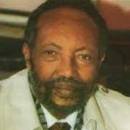
Biography
Tsegaye Gebre-Medhin (1936-2006) was an Ethiopian playwright, poet, essayist, and social activist. Though born in Ethiopia, he spent much of his adult life in exile in Europe and the United States, where he continued to write and advocate for social justice in Africa.Tsegaye was born in the town of Boda in western Ethiopia on August 17, 1936. He was part Amhara and part Oromo. As many Ethiopian boys do, he also learned Ge'ez, the ancient language of the church, which is an Ethiopian equivalent of Latin. He also helped the family by caring for cattle. He was still very young when he began to write plays while at the local elementary school. He later studied at the Blackstone School of Law in Chicago, Illinois, where he earned a degree in law. He then went on to study theater and drama at the Royal Court Theatre in London.
Tsegaye's early works were heavily influenced by Ethiopian culture and history, and he often wrote about the struggle for independence from colonialism. His later works were more focused on the broader issues facing Africa, including poverty, political corruption, and social injustice. He was a prolific writer, with over 30 plays, several collections of poetry, and numerous essays to his name.
In addition to his literary work, Tsegaye was also a social activist. He was a founding member of the Ethiopian Writers' Association and was actively involved in the struggle against the military regime that ruled Ethiopia from 1974 to 1991. He was a vocal critic of both the military regime and the subsequent government, which he believed did not do enough to address the social and economic problems facing Ethiopia.
He received numerous awards and honors for his contributions to literature and social justice, including the Haile Selassie I Prize for Literature in 1965 and the Lotus Prize for Literature in 1993. He passed away in 2006, leaving behind a legacy as one of Africa's most celebrated and influential writers.


