Biography
Knut Hamsun (1859–1952), born **Knud Pedersen**, was born on August 4, 1859, in Lom, in Norway's Gudbrandsdal Valley. He was the fourth of seven children in an impoverished family. At the age of nine, he was sent to live with an uncle, who forced him to work hard and treated him harshly. In 1874, Hamsun left his uncle's home and returned to his family.
During his youth, he worked in a wide variety of occupations, including apprentice, shoemaker's assistant, shop clerk, peddler, and assistant teacher. At the same time, he began writing and published his first works in 1877. During the 1880s, he traveled twice to the United States, where he held various jobs and gained experiences that profoundly influenced his outlook and literary work.
Hamsun achieved international recognition in 1890 with the publication of **Hunger**, a novel widely regarded as a landmark of modern European literature for its pioneering psychological depth. It was followed by such notable works as **Mysteries**, **Pan**, and **Victoria**. His masterpiece, **Growth of the Soil** (1917), earned him the **Nobel Prize in Literature in 1920**.
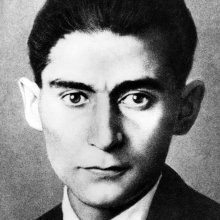
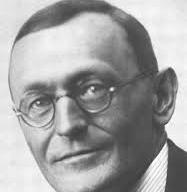
His novels are distinguished by their profound psychological insight, lyrical prose, and unconventional, solitary characters who are deeply connected to nature. His literary innovations had a lasting influence on many of the twentieth century's greatest writers, including Ernest Hemingway, Franz Kafka, Hermann Hesse, Henry Miller, and Isaac Bashevis Singer.
During the Second World War, Hamsun publicly supported Nazi Germany and the German occupation of Norway. In 1940 he wrote that "the Germans are fighting for us," and following Adolf Hitler's death in 1945, he published an obituary praising him as "a preacher of the gospel of justice for all nations." These statements provoked widespread condemnation and permanently damaged his reputation.
After the war, Hamsun was arrested and underwent a psychiatric evaluation. He was ultimately found financially liable for his collaboration with the occupation authorities and sentenced to pay a substantial fine. The reasons behind his unwavering support for National Socialism remain the subject of historical debate and have never been fully explained.
Knut Hamsun died on February 19, 1952, at the age of ninety-two.