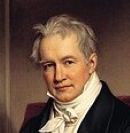
Biography
Johannes Kepler was a German astronomer, mathematician, writer and periodically, for financial reasons, astrologer. He was born on December 27, 1571, in Weil der Stadt, a town 30 kilometers from today’s Stuttgart. His paternal grandfather had served as mayor but at Kepler’s time the family had declined. His father was a mercenary soldier and left when Johannes was five years old; they never show him again, most probably was killed in the war. His mother was the daughter of an innkeeper and as she gave prematurely birth to Johannes, he was a sickly child. He had though an amazing talent in mathematics, in all his childhood, he used it to impress travelers at his grandfather's inn. He was interested from a young age in sky, at the age of 5 years he observed the comet of 1577, while at 9 he watched the eclipse of the moon, keeping notes that the moon "appeared quite red". He suffered smallpox when he was young and was left with impaired vision, so from necessity he was turned to theoretical astronomy. In 1589 he finished school and started studying Theology at the University of Tübingen, but in university emerged his talent in mathematics and he earned a reputation also as an astrologer. He wanted to become a chaplain, but he was recommended for a position as teacher of mathematics and astronomy at the Protestant school in Graz. He accepted the position in April 1594, at the age of 23. Two years later he published his first astronomical book titled “Mysterium Cosmographicum” . In 1597 he married Barbara Müller, twice widowed at her 23, with enough assets and a child from a previous marriage. They had four children, of which two died young.In December 1599 the Danish astronomer Tycho Brahe invited Kepler to a place outside Prague to work on his astronomical surveys. In Graz they were at that time strict policies against Lutherans as Kepler, he grabbed the opportunity and left Graz. Tycho died the following year, leaving a large volume of very precise data on the positions of the planets. As Kepler wrote in 1605: "I confess that when Tycho died, I took advantage of the absence of heirs and acquire all his work". Kepler was appointed Tycho’s successor as imperial mathematician with the responsibility to complete his unfinished work. From this position he began his studies for non circular orbits of the planets. The next decade was the most productive of his life and in 1609 he published "New Astronomy", where he presented his first two laws. In 1611 his wife got ill with fever, she briefly rebounded but then she died as one of their children did, from smallpox. With his father in law he came into a law conflict about her property, while the following year the emperor died and in Prague were prevailed great intensity, both political and religious. To avoid persecution as he was Lutheran, he went to Leeds, taking a position in mathematical school there. In 1615 he married Susan Ritinger, with whom he had six children, 3 of them died in infancy. In 1617 his mother was accused as a witch, a woman who was in conflict with his brother claimed that she had tried to poison her with herbs. If it wasn’ t for Kepler, she would have be burned as a witch. She was imprisoned though, from August 1624 for 14 months. Kepler in 1619 ended "Harmony of the Worlds" where his third law is contained, and in 1627 he completed the Rudolphine Tables, in which was given the exact future positions of the planets, allowing the prediction of astronomical events. His work played a significant role in the acceptance and understanding of the heliocentric system at the next century. His last years were spent traveling from the imperial court of Prague, to Linz and Ulm, in a temporary home in Sagan and finally in Regensburg where he was ill with fever and died on 5 November 1630. According to his wish, in his grave was written: “I measured the skies, now the shadows I measure, Skybound was the mind, earthbound the body rests”.