Biography
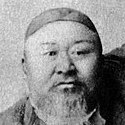
Abay Qunanbayuli (August 10, 1845 – July 6, 1904) was a Kazakh poet, philosopher and writer, widely regarded as the founder of modern Kazakh literature. He was born into a wealthy family in eastern Kazakhstan, which enabled him to receive a broad education. He first studied at a madrasa, where he learned Arabic and Persian, and later attended a Russian school, where he was introduced to Russian and Western literature.
Abay began writing poetry at the age of twelve and spent much of his life studying, writing and translating. He introduced Kazakh readers to major works of world literature, translating writers such as Schiller, Pushkin, Byron, Mickiewicz, Heine and Goethe into Kazakh.
His literary legacy includes poetry, prose, philosophical reflections and essays. In his writings, he portrayed the traditional life and customs of the Kazakh people while criticizing ignorance, corruption, social injustice, laziness and vanity. He strongly advocated education, knowledge, moral responsibility and openness to the wider world.
Abay became one of the most important intellectual and cultural figures in Kazakh history and is regarded as a national symbol of Kazakhstan. His works have had a lasting influence on Kazakh literature, language and culture.
He died on July 6, 1904, at the age of fifty-eight.