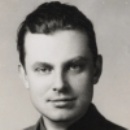
Biography
Czesław Miłosz (1911–2004) was a Polish poet, novelist, translator, and diplomat who was awarded the Nobel Prize in Literature in 1980. He was born on June 30, 1911, in the village of Szetejnie, then part of the Russian Empire and now located in Lithuania. His father was a civil engineer, while his mother came from an aristocratic family. Miłosz identified himself as Polish, stating:
"My family had already been speaking Polish in the sixteenth century, just as many families have long spoken Swedish in Finland and English in Ireland, and therefore I am a Polish poet and not a Lithuanian one. But the landscapes and perhaps the spirit of Lithuania never left me."
Miłosz became fluent in several languages, including Polish, Lithuanian, Russian, English, and French. After completing his secondary education in Vilnius, he studied law at the University of Vilnius. In 1931 he traveled to Paris, where he was influenced by his distant cousin Oskar Miłosz, a poet and playwright. The year he received his degree, in 1934, his first collection of poetry was published.
He wrote all of his poems, novels, and essays in the Polish language, and he also translated the Psalms of the Old Testament into Polish.
In his youth, Miłosz adopted what he described as a "scientific, atheistic position," although he later returned to the Christian faith. After spending the years of the Second World War in Warsaw, he was appointed cultural attaché of the People's Republic of Poland in Paris and Washington, D.C.
In 1951, disgusted, as he stated, by the hypocrisy and authoritarianism of the communist regime, he defected to the West. As a result, he was declared persona non grata by the Polish government and his writings were banned in his homeland. In 1960 he accepted a position as a university professor at Berkeley and settled in California. Following his Nobel Prize award in 1980, the ban on his works in Poland was lifted, and Miłosz came to be celebrated as a symbol of the restoration of freedom in his country.
He died on August 14, 2004.