Biography
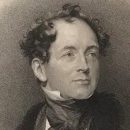
Thomas Moore (1779-1852) was an Irish poet, lyricist, musician, writer, satirist and civil rights activist. He was born on 28 May 1779 in Dublin to a family of Catholics who, under the current system of the time, had reduced rights over Protestants (they did not have the right to vote, to hold important positions or to be sworn in courts, to carry weapons, attend good schools).
Moore showed an early interest in music and performance, in Dublin he leanred Latin, Greek and fluent French and Italian. At the age of fourteen he had published one of his poems in a literary magazine. In 1795, Moore was one of the first Catholics to be admitted to Trinity College Dublin, in order to become a lawyer. In 1796, the French Republic's attempt to support the outlawed United Irish failed, and Moore, although not an active member of the United Irish, was accused of inciting rebellion by writing a patriotic text against the Treaty of Union with England. He was eventually acquitted of the charges and later had no involvement in the Irish Revolution of 1798.
In 1799, Moore continued his legal studies at the Middle Temple in London, although he would never become a lawyer. In 1800 he published a translation of Anacreon's lyrics, dedicated to the Prince of Wales; with this book he became known in the aristocratic and literary circles of London. Through his acquaintances he was appointed secretary of the court in Bermuda. After 6 months he found life on the island boring, appointed a replacement and left to travel to North America. He returned to England in 1804, published "Letters, Odes and Other Poems", (1806). A well-known critic of the time reported the volume to the Edinburgh Inspectorate (July 1806), calling Moore a corruptor, Moore provoked him into a duel which was stopped at the last minute after police intervention.
The same year he married the Protestant actress, Bessy Dyke and they settled in London. They had five children, none of whom survived to adulthood. During this period he begins to publish humorous and political comments.
In 1818, it was discovered that the man who had appointed his deputy in Bermuda had embezzled 6,000, a large sum for which Moore was responsible. To escape from prison, Moore left for France, where he last saw Byron, who entrusted him with a manuscript of his memoirs to be published after his death. Moore considered it right to burn them so as not to damage the reputation of the great romantic poet. Later, with the valuable help of Mary Shelley, he composed a biography of Lord Byron, to make up for the loss of his memoirs. He became widely known for his "Irish Melodies", which conveyed themes from life in Ireland expressing a variety of patriotic, erotic and philosophical themes.
Moore was one of the first fifty members of the Philhellenic Committee of London. Together with Lord Byron, he supported the Greek liberation struggle with money, weapons and propaganda. In the late 1840s (and as the famine of the Great Famine struck Ireland), Moore's forces began to abandon him. He died on February 25, 1852.