Biography
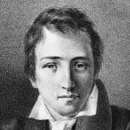
Novalis was the pseudonym of Georg Philipp Friedrich Freiherr von Hardenberg, a German poet, philosopher, and writer born on May 2, 1772, in Saxony. He was a prominent figure in the German Romantic movement and is considered one of its most significant representatives.Novalis was the eldest son of a wealthy family and grew up in a highly educated and religious household. He began studying law in 1790 at the University of Jena, but his interests quickly turned to philosophy, literature, and science. During this time, he became close friends with Friedrich Schiller and Johann Wolfgang von Goethe, two of Germany's most celebrated writers.
Novalis's literary works, which include poetry, essays, and a novel, reflect his interest in Romanticism's themes of nature, love, and spirituality. His most famous work is the novel "Heinrich von Ofterdingen," which he never finished. It tells the story of a young poet who searches for the "blue flower," a symbol of the infinite and the unattainable.
In addition to his literary work, Novalis also made significant contributions to the field of mineralogy, publishing several scientific papers and co-authoring a mineralogy textbook. His interest in science is reflected in his philosophical writings, where he often uses scientific concepts to explain spiritual and philosophical ideas.
He released a single collection of poems, titled Hymnen an die Nacht (Hymns to the Night). This was written in dedication to his late fiancé, Sophie von Kühn, who had died very young of tuberculosis. Unfortunately, within seven months of publication of this collection, Novalis contracted the same disease and also died on March 25, 1801, at the age of 28. Despite his short life, he left a lasting impact on German literature and Romanticism, and his works continue to be studied and admired to this day.