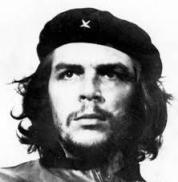
Biography
Karl Raimund Popper (July 28, 1902 – September 17, 1994) was an Austrian-British philosopher and one of the twentieth century's most influential thinkers. Best known for his philosophy of science and his defense of liberal democracy, he made groundbreaking contributions to epistemology, political philosophy, and the methodology of scientific inquiry.
Popper was born in Vienna, Austria-Hungary, into a highly educated and cultured family of Jewish origin that had converted to Protestantism. From an early age, he developed wide-ranging interests, including music, mathematics, physics, philosophy, literature, and politics. He initially trained as a cabinetmaker and worked as an apprentice carpenter, believing that manual labor provided valuable practical experience and helped him avoid the detachment often associated with academic life.
He later qualified as a primary school teacher and continued his studies at the newly established Vienna Pedagogical Institute. In 1928, he earned a doctorate in psychology from the University of Vienna under the supervision of Karl Bühler, while maintaining a deep interest in philosophy and the foundations of scientific knowledge. In 1930, he began teaching mathematics and physics at a secondary school in Vienna.
Popper first gained international recognition with the publication of *The Logic of Scientific Discovery* (1934), in which he challenged the traditional view that scientific theories can be verified through observation. Instead, he argued that genuine scientific theories must be **falsifiable**—that is, they must make predictions capable of being tested and potentially proven false. This principle of falsifiability became one of the defining ideas of modern philosophy of science.
Following the rise of Nazism and the annexation of Austria, Popper emigrated to New Zealand in 1937, where he taught philosophy at Canterbury University College in Christchurch. During the Second World War, he wrote his most influential political work, *The Open Society and Its Enemies*, published in 1945. In this landmark book, he defended democracy, individual freedom, and critical thinking while criticizing all forms of totalitarianism. He argued that societies based on unquestionable authority, rigid ideologies, or claims to possess absolute truth inevitably threaten human freedom.
In *The Open Society and Its Enemies*, Popper introduced the influential distinction between the **open society** and the **closed society**. A closed society is governed by tradition, dogma, tribal loyalties, or unquestioned authority, leaving little room for individual freedom or critical discussion. By contrast, an open society encourages free debate, democratic institutions, and the continual criticism of political ideas and social institutions. For Popper, progress in both science and politics depends on the willingness to recognize mistakes, revise beliefs, and subject ideas to rational criticism.
In 1946, Popper moved to England, and in 1949 he was appointed Professor of Logic and Scientific Method at the London School of Economics, where he remained until his retirement in 1969. He continued to write, lecture, and influence generations of philosophers, scientists, economists, and political theorists.
Throughout his life, Popper received numerous international honors, including a knighthood from Queen Elizabeth II in 1965, membership in the Royal Society, and honorary doctorates from many universities around the world. His books have been translated into dozens of languages and continue to shape debates on science, democracy, education, and critical thinking.
Karl Popper died in London on September 17, 1994, at the age of ninety-two. He is remembered as one of the foremost defenders of reason, intellectual humility, and the principle that knowledge advances not by proving ideas true, but by continually testing and challenging them.