Biography
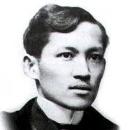
José Rizal (1861-1896) was a Filipino intellectual and political activist who, through his writings, inspired his country's struggle for independence and is considered a national hero of the Philippines.He was born on June 19, 1861, in Calamba, 40 miles south of Manila, during Spanish colonial rule, to a wealthy bourgeois family; he was the seventh of 11 children. The family's private library was one of the largest of the time, José was a gifted student who won various prizes in literary and student competitions. He had an excellent language skills and eventually spoke 22 languages and dialects.
He studied in Manila and continued his studies in Madrid, Paris and Heidelberg, obtaining degrees in philosophy and medicine. Due to his mother's problematic vision, he specialized in ophthalmology. In addition, he studied drawing, painting and sculpture. While still living in Europe, he began publishing a series of works, most notably Noli Me Tangere (Touch Me Not) and El filibusterismo (The Reign of Greed).
"Do Not Touch Me" was printed in Berlin in 1886. When it arrived in the Philippines, the book caused a great deal of controversy. The censorship committee considered it heretical and subversive because it was directed against the Spanish government and the state religion. Its sale was banned and those who owned it were imprisoned. Despite the bans, the book and copies of it were secretly distributed, and Rizal's ideas became the focus of discussions.
Despite concerns for his safety, Rizal returned to his homeland in 1887 and began working as an ophthalmologist. He began receiving death threats from his enemies and in 1888, he succumbed to pressure from his family and left the Philippines. He has traveled to Hong Kong, Japan, America and Europe, focusing his work on scientific research and political writing. During this time he wrote articles for La Solidaridad, a Philippine newspaper based in Madrid. In his articles, as in his books, he called for reforms and equal rights before the law for his compatriots.
The colonial government considered him a dangerous radical and declared him an enemy of the state. When he returned to the Philippines in 1892, he was arrested and exiled to the island of Mindanao. He remained there for four years, practicing ophthalmology and encouraging agricultural reforms. During this period, the people of the Philippines were in turmoil and preparing for the struggle against the Spanish regime. The Revolution broke out in 1896. Rizal denounced the violence and was allowed to travel to Cuba but was arrested during the voyage and returned to Manila for trial. He was accused of conspiracy and participating in an uprising and, despite the lack of evidence, was sentenced to death.
During his exile he had fallen in love with a girl but the Spanish authorities had forbidden them to marry. He was allowed to marry her, two hours before his execution, which took place on December 30, 1896.