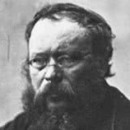
Biography
Jean-Paul Sartre (Paris, 21 June 1905 – 15 April 1980) was a French philosopher, novelist, playwright, literary critic, and one of the most influential figures of twentieth-century existentialism. His father, a naval officer, died when Sartre was still an infant. He spent his early years with his mother and later lived in La Rochelle with her and her second husband. In 1921 he returned to Paris, where he attended some of the country's best schools before studying philosophy at the Sorbonne.
At university Sartre quickly gained a reputation for his intelligence, originality, and rebellious spirit. There he met Simone de Beauvoir, who would become his lifelong companion and intellectual partner. Their relationship was unconventional and based on mutual independence, a choice that challenged the social norms of their time. After graduating, both passed the highly competitive agrégation examination and became philosophy teachers in different French cities.
Sartre began writing fiction in the 1930s and achieved his first major literary success with the novel *Nausea* (1938). During the Second World War he served in the French army as a meteorologist. Captured by the Germans in 1940, he spent several months in a prisoner-of-war camp before being released in 1941 for health reasons. Returning to Paris, he resumed teaching and writing and became involved in intellectual resistance activities. In 1943 he published his most important philosophical work, *Being and Nothingness*, which established him as one of the leading thinkers of his generation.
After the liberation of France, Sartre's fame spread rapidly. Together with Simone de Beauvoir and other intellectuals, he founded the influential journal *Les Temps Modernes* (*Modern Times*). He lectured throughout Europe and America, wrote novels, plays, essays, and political commentary, and became one of the most recognizable public intellectuals in the world. He met revolutionary leaders such as Fidel Castro and Che Guevara and frequently spoke out against colonialism, social injustice, and political oppression. He criticized both American foreign policy and French actions in Algeria, while also condemning Soviet repression, including the invasion of Hungary in 1956.
In 1964 Sartre refused the Nobel Prize in Literature, explaining that acceptance would compromise his independence as a writer. Alongside Bertrand Russell, he participated in the Russell Tribunal, which investigated American actions during the Vietnam War. During the student protests of May 1968, Sartre openly supported the demonstrators and gave them a public platform through interviews and articles. Throughout his life he remained politically engaged, believing that intellectuals had a responsibility to participate actively in society rather than remain detached observers.
In 1972 Sartre suffered a serious stroke that left him almost blind and largely ended his literary work. During his final years Simone de Beauvoir cared for him while continuing her own writing career. Although their relationship often attracted controversy because of its unconventional nature, the bond between them endured for more than fifty years. They never married and had no children, but each adopted a daughter. Even in poor health, Sartre continued to support humanitarian causes and lend his name to campaigns defending political prisoners and human rights.
Sartre was not the founder of existentialism, but he did more than anyone else to popularize it. An atheist existentialist, he argued that human beings cannot rely on God to provide meaning or moral guidance. His famous statement that "man is condemned to be free" expressed the idea that every individual is responsible for his or her choices. According to Sartre, "existence precedes essence": we are not born with a predetermined nature or purpose. We first exist and then define ourselves through our actions. Born into circumstances we do not choose, we nevertheless remain responsible for what we become. For Sartre, freedom and responsibility are inseparable, and it is through our choices that we create our identity and give meaning to our lives.