Biography
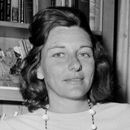
Anne Sexton, born Anne Gray Harvey on November 9, 1928, in Newton, Massachusetts, was one of the most distinctive and influential American poets of the twentieth century. Associated with the Confessional poetry movement, she became known for her intensely personal writing, in which subjects traditionally considered private or taboo — female sexuality, marriage, motherhood, psychological suffering, death, and the complexities of family relationships — were transformed into powerful literary expression.
She grew up in Weston, Massachusetts, in a relatively prosperous family, but her childhood was marked by difficult family relationships and emotional tensions. She attended Rogers Hall School in Lowell and later spent a year at Garland Junior College in Boston. In 1948, at the age of nineteen, she married Alfred Muller Sexton II. For a time, she worked as a fashion model while her husband was away serving in the Korean War. The couple had two daughters, Linda, born in 1953, and Joyce, born in 1955.
The years following the birth of her children were particularly difficult. Sexton experienced severe psychological crises and periods of hospitalization. At the suggestion of her psychiatrist, she began writing poetry in 1956, initially as a way of exploring and expressing her inner experiences. What began as a therapeutic exercise gradually developed into a remarkable literary vocation. In 1957, she joined poetry workshops in Boston, where she studied with John Holmes and Robert Lowell. She also became close friends with fellow poet Maxine Kumin and developed a significant literary connection with Sylvia Plath. The work of W. D. Snodgrass, particularly his collection *Heart's Needle*, helped her recognize the artistic possibilities of deeply personal poetry.
Her first collection, *To Bedlam and Part Way Back*, appeared in 1960 and immediately attracted attention for its emotional intensity and unconventional subject matter. It was followed by *All My Pretty Ones* (1962), which further established her reputation. In *Live or Die* (1966), one of her most celebrated collections, Sexton explored the struggle between despair and the desire to remain alive. The book received the Pulitzer Prize for Poetry in 1967, bringing her national recognition.
Throughout her career, Sexton continually expanded the boundaries of her poetic world. *Love Poems* (1969) explored intimacy, desire, and the complexities of romantic relationships, while *Transformations* (1971) reinterpreted the fairy tales of the Brothers Grimm, giving familiar stories a darker, more psychologically revealing dimension. Her poetry often combined autobiographical elements with mythology, fairy tales, religious imagery, irony, and startling metaphors. Beneath its direct and sometimes disturbing language lay a carefully constructed poetic art, marked by musicality, formal discipline, and an extraordinary command of voice.
Sexton also worked in theatre and children's literature. Together with Maxine Kumin, she wrote several children's books, and her play *Mercy Street* was produced in 1969. She taught creative writing at several institutions, including Boston University and Colgate University, and became a compelling performer of her own poetry, captivating audiences with the dramatic intensity of her readings. In 1965, she was elected a Fellow of the Royal Society of Literature in London, and throughout her career she received numerous literary honours and fellowships.
Despite her growing success, Sexton's personal life remained troubled. She continued to struggle with serious psychological difficulties and alcoholism, while her relationships and family life became increasingly complicated. Her poetry, however, continued to evolve, moving beyond personal confession towards broader explorations of identity, gender, religion, love, and mortality. She refused to separate the supposedly ordinary experiences of women's lives from the subjects considered worthy of serious literature.
On October 4, 1974, Anne Sexton died by suicide at the age of forty-five in Weston, Massachusetts. Her final collection published during her lifetime, *The Death Notebooks* (1974), reflected her continuing preoccupation with mortality and the human condition. *The Awful Rowing Toward God* was published posthumously in 1975.