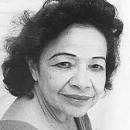
Biography
Clementina Suárez (12 May 1902 – 1991) was a Honduran poet, writer and cultural promoter, one of the pioneering women of twentieth-century Central American literature. Independent, unconventional and outspoken, she challenged both literary conventions and the restrictive social expectations placed on women in Honduras.
She was born in Juticalpa, Olancho, Honduras, and received only a limited formal education. After the death of her father, she left her family home and began an independent life, moving through several Honduran cities before eventually settling for periods in Tegucigalpa. She supported herself through different kinds of work while continuing to write poetry.
In 1930 she published "Corazón sangrante", becoming the first Honduran woman to publish a book of poetry in the country. The collection announced a voice that was intensely personal, emotional and openly concerned with love, desire and individual freedom.
During the following decade Suárez published several further collections, including "Los templos de fuego", "De mis sábados el último", "Iniciales", "Engranajes" and "Veleros". Her poetry gradually expanded from personal and romantic themes toward questions of social justice, political commitment, freedom and hope.
Her public life was as unconventional as her poetry. Suárez rejected many of the expectations imposed on women of her generation and became known in Honduras as the "New Woman". Her independence, her public celebration of the female body and her willingness to speak openly about women's autonomy made her both admired and controversial.
Suárez travelled widely through Central America, Mexico, Cuba and the United States. During periods abroad she became closely involved with artists, writers and intellectuals. In Mexico she established the Galería de Arte Centroamericano, helping promote Central American artists and contemporary culture.
She was also closely connected with the visual arts and became an important cultural promoter throughout Central America. Her circle included writers and artists from several countries, and she used galleries, readings and cultural gatherings to create spaces for new artistic work.
Among her later books were "Creciendo con la hierba" (1957), "Canto a la encontrada patria y su héroe" (1958) and "El poeta y sus señales" (1969). In 1970 she received Honduras' National Prize for Literature, the Premio Nacional de Literatura Ramón Rosa.
Clementina Suárez died in Tegucigalpa in 1991. By then she had become one of the central figures of Honduran poetry and a symbol of artistic and personal independence.


