
The first farmers built their huts and soon they were organized into groups to protect themselves from barbarous nomads. Owing to external dangers, communities became fortified cities, command and defense was taken by a leader with his people. The captain gained strength and gradually turned into feudal, many centuries before the feudal system developed into the West. While in the rest of the world was happening the rise and fall of Babylon, Assyria, Egypt, Persia, Greece, Rome, Arabs and so on, the administrative system and the social organization of China remained unaffected by external factors, up to the previous century. The Chinese family has remained among the most powerful and lasting institutions, for nearly 4000 years through ties of respect and obedience. The woman obeyed husband, son obeyed the parents, younger siblings the older, daughter obeyed the mother, the bride obeyed the whole the family.
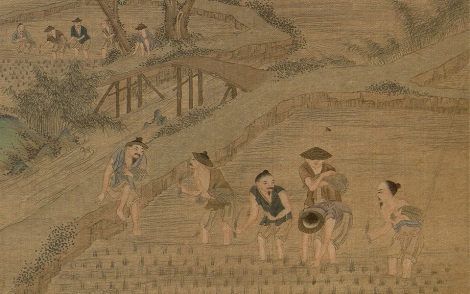
The villagers were sowing and rearing on behalf of the feudal, a group of feudal joined together under a powerful ruler and the rulers under an emperor, "Son of Heaven on earth". The aristocracy was hereditary, the people were divided into patriarchal families. Farmers were also used for public works, trade was blooming, fishing and salt marshes were often a monopoly of the state. With the feudalism was developed a sophisticated courtesy, a code of compliments, habits and rituals that took the form of religion was formed for the upper classes. The administrative system seemed ideal, but in practice political life turned out to be the turn of many vicious and corrupt administrations, periodic utilitarian reforms, and lasting antagonisms of power and wealth within the same dynasty. There has been a period of 2 centuries during which 21 emperors were murdered and many hundreds of aristocrats. The war of need for defense became a habit of assault and perpetually exhausted the people, but life continued, and through the ataxia, the foundations for Chinese language, art and philosophy were created.
One of the semi-mythical leaders in Chinese history, the supposed founder of the Xia dynasty, is Yu the Great (c. 2200 BC). He was revered for the flood control measures (the building of irrigation canals and the dredging of riverbeds) along the Yellow River, Wei River and other waterways. Copper, tin and other metals began to be mined and people developed a technology that led to the creation of bronze. That development marks the beginning of the first historical state in Chinese history in around 2200 BC, which called the Xia. During the Xia period, a new type of architecture began, a significant change compared to earlier methods of construction and over time became characteristic of urban places in Chinese history. Back to the Story of Humankind